EV Charger Installation

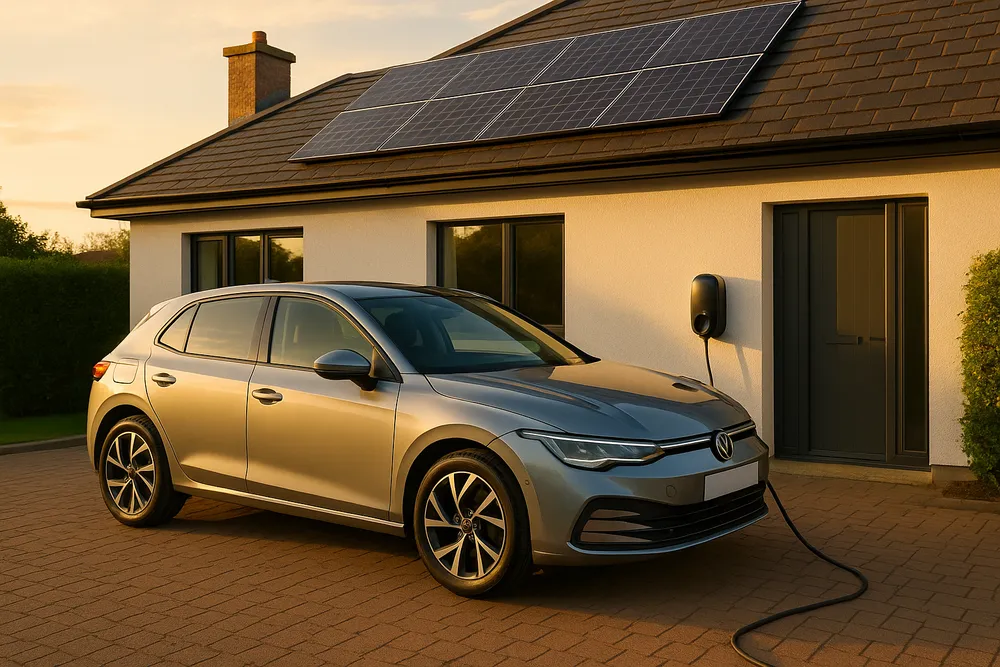
Home EV charger installation in Ireland. Charge your car from solar panels or cheap night rates from just 6c/kWh. SEAI grant available. Professional installation by Lumen Solar.

Key Features

  • Charge from solar — completely free
  • Night rate charging from just 6c/kWh
  • SEAI grant of €300 available
  • Solar-integrated smart chargers
  • Tethered chargers — just plug in and go
  • Apartments and multi-unit installations

EV Charger Installation — Stop Paying Motorway Prices

If you’re charging your EV at motorway fast chargers, you’re spending up to 64c per kWh. That’s nearly the same as running a diesel car.

With a home charger and the right electricity tariff, you can charge for as little as 6c per kWh — or completely free if you have solar panels. That’s the difference between spending €38 to fill your car and spending €3.60. For the same charge.

We install smart EV chargers that integrate directly with your solar PV system and battery storage. One app, one system, everything talking to each other.

The Real Cost of Charging an EV in Ireland

Let’s cut through the noise with actual numbers. Here’s what it costs to charge a typical 60kWh EV battery from empty to full, and what that means per 100km of driving.

Based on average EV consumption of ~16 kWh/100km. All prices include VAT at 9%. Accurate at time of writing, March 2026.

Charging MethodCost per kWhCost for Full Charge (~60kWh)Cost per 100km
Home solar chargingFREE€0.00€0.00
Pinergy EV night rate~6c€3.60~€0.96
SSE Airtricity EV rate~9c€5.40~€1.44
Home charging (standard rate)~35c€21.00~€5.60
ESB Standard charger (PAYG)59c€35.40~€9.44
ESB Fast charger (PAYG)64c€38.40~€10.24
ESB High Power charger (PAYG)66c€39.60~€10.56
Ionity (PAYG)79c€47.40~€12.64
Diesel car€1.90/litre~€95 per tank~€11.40
Petrol car€1.85/litre~€92 per tank~€12.95

Diesel based on 6L/100km at €1.90/litre. Petrol based on 7L/100km at €1.85/litre. Fuel prices: AA Ireland March 2026 averages.

Read that table again. Charging at home on a night rate costs less than €1 per 100km. A diesel car costs over €11 per 100km. That’s not a small difference — that’s a fundamentally different cost of transport.

If you drive 20,000km a year:

  • Solar charging: €0/year
  • Pinergy night rate: ~€192/year
  • Standard home rate: ~€1,120/year
  • Motorway fast chargers: ~€2,048/year
  • Diesel car: ~€2,280/year
  • Petrol car: ~€2,590/year

Switching from diesel to home EV charging on a night rate saves you over €2,000 a year. With solar, it’s over €2,200.

How EV Charging Actually Works (The Bit Nobody Explains)

Here’s something most EV charger companies won’t tell you, because they’re selling you a box on the wall.

The charger on your wall is not actually the charger.

That unit on your wall — the one everyone calls an “EV charger” — is really just a glorified outdoor socket with a fancy connector and a communications protocol. It delivers AC power to your car. The actual charger? That’s inside your car. Your car’s internal charger (called the onboard charger) converts the AC power from the wall into DC power that your battery can store.

The wall unit simply delivers what your car asks for. Nothing more.

This matters because it determines how fast your car can charge:

AC Charging (Home Chargers)

  • Single phase supply = maximum 7kW from the wall unit
  • Three phase supply = up to 22kW from the wall unit
  • But — most cars can only accept 11kW on AC, regardless of what the wall unit can deliver
  • A 22kW wall unit will only charge at 11kW if that’s all your car’s internal charger can handle

The wall unit supplies AC power → your car’s onboard charger converts it to DC → your battery stores it.

DC Charging (Public Fast Chargers)

DC chargers are different. They are the charger — they convert AC to DC themselves and connect straight to your battery, bypassing your car’s onboard charger entirely. That’s why they can charge so much faster. They’re doing the conversion work externally at much higher power levels.

That’s also why they cost 59-79c per kWh instead of 6c.

DC Fast Charging at Home — Yes, Really

Here’s where it gets interesting. Sigenergy now offers 25kW DC fast charging at home. Their system combines your solar inverter, battery storage, and EV charger into one integrated unit. Your car can charge through the inverter + battery + solar panels combined — up to 25kW, straight to your car’s battery.

That’s faster than most public AC chargers, from your own driveway.

The Night Rate Sweet Spot

You don’t need extra solar panels to charge your EV cheaply. In fact, EV charging is best done at night on cheap tariffs.

Here’s the maths:

7kW charger × 3 hours of cheap rate = 21kWh

How far does 21kWh get you? In a typical EV consuming around 15-17 kWh per 100km, that’s roughly 120-150km of driving range. Every single night.

The average Irish commute is about 25km each way — 50km round trip. So three hours of cheap-rate charging gives you two to three days’ worth of commuting from a single overnight session.

And what does it cost?

  • On Pinergy EV night rate (6c/kWh): 21kWh × €0.06 = €1.26
  • On SSE Airtricity EV rate (9c/kWh): 21kWh × €0.09 = €1.89
  • On Energia Smart Drive (9c/kWh): 21kWh × €0.09 = €1.89

Compare that to the same 120-150km in diesel at €1.90/litre: roughly €13-€17. That’s the cost argument, right there.

Irish EV Night Rate Tariff Comparison

Every major Irish electricity provider now offers a special EV charging rate for smart meter customers. Here’s how they stack up.

All prices include VAT at 9%. Accurate at time of writing, March 2026. Rates shown are the EV/boost rate only — day rates and standing charges vary by provider.

ProviderPlan NameEV Night RateCheap WindowDurationDay Rate
PinergyLifestyle EV Drive Time~6c/kWh2am – 5am3 hours41.77c
SSE AirtricitySmart EV Charge~9c/kWh2am – 5am3 hours39.24c
EnergiaSmart Drive~9c/kWh2am – 6am4 hours39.84c
Bord Gáis EnergyGreen EV Smart~10c/kWh2am – 5am3 hours36.53c
Electric IrelandHome Electric+ Night Boost~11c/kWh2am – 4am2 hours36.34c
FlogasSmart EV Night Charge~10c/kWh2am – 5am3 hours~40c

What to Look For

Cheapest per-kWh rate: Pinergy wins hands-down at ~6c/kWh. If EV charging cost is your priority, this is the one.

Longest cheap window: Energia gives you 4 hours (2am–6am) at ~9c/kWh. That’s 28kWh on a 7kW charger — enough for nearly 200km of range. If you have a bigger battery or irregular driving, the extra hour matters.

Best overall value: Consider the day rate and standing charge too. If you use a lot of electricity during the day, a lower day rate with a slightly higher EV rate might save you more overall.

Three-phase bonus: If you have three-phase power and an 11kW charger, Energia’s 4-hour window gives you 44kWh per night — nearly a full charge from empty on most EVs.

What We Recommend — And Why

Match Your Charger to Your Solar System

This is the single most important piece of advice we give: get an EV charger from the same brand as your solar inverter and battery.

Why? One app. One ecosystem. Everything communicates. Your solar panels, battery, and EV charger all know what each other is doing. The charger knows when there’s excess solar. The battery knows when to hold charge for the house vs send it to the car. Nothing fights each other.

When you mix brands — say a Zappi charger with a Sigenergy inverter — they don’t talk to each other. You end up with two apps, no coordination, and your charger and battery can end up competing for the same solar energy.

We install chargers from the brands we trust and use for our solar systems, ensuring everything works as one integrated system.

Always Get a Tethered Charger

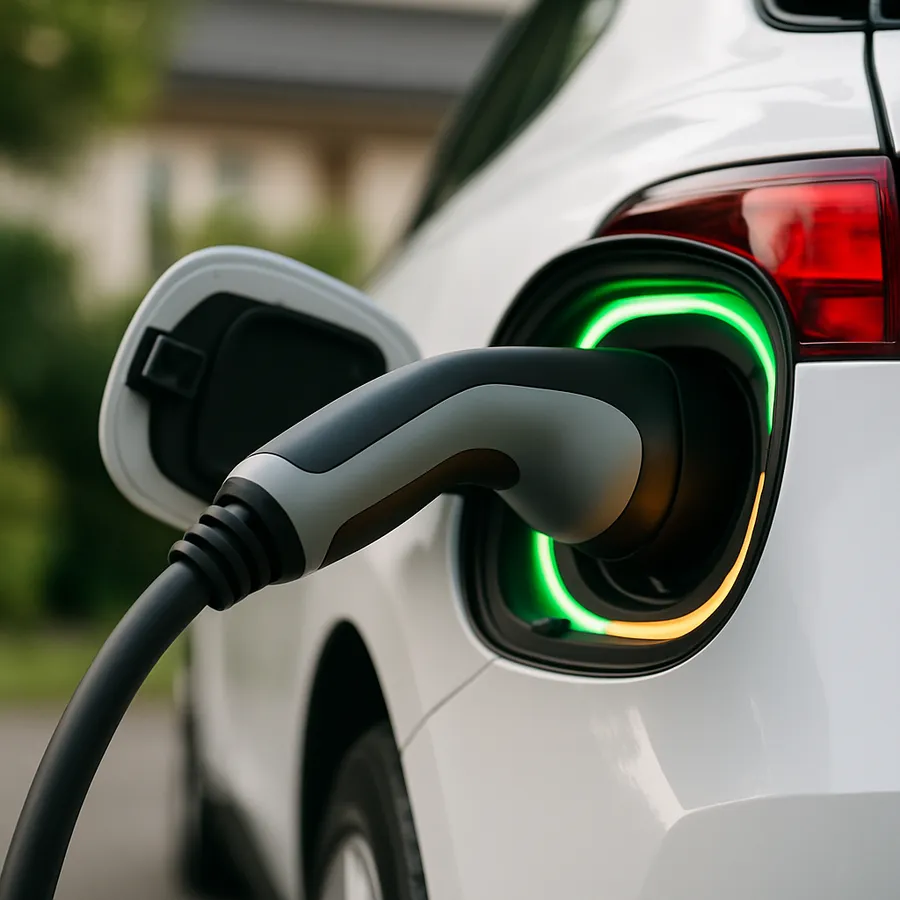
We always recommend tethered chargers — that’s the type with the cable permanently attached to the wall unit.

The reason is simple: convenience in Irish weather.

With an untethered charger, every time you come home you need to:

  1. Open the boot
  2. Dig out the charging cable
  3. Plug one end into the wall unit
  4. Plug the other end into the car
  5. Do all of this in the rain

With a tethered charger, you hop out of the car, grab the cable that’s already hanging on the wall, plug it into the car, and walk inside. That’s it. Ten seconds, one connection, done.

Tethered vs Untethered — The Full Picture

TetheredUntethered
Convenience✅ Cable always ready — just grab and plug in❌ Need to get cable from boot every time
Speed✅ 10 seconds to connect❌ 30-60 seconds fumbling with cable
Weather✅ Minimal exposure to rain❌ Extended time outside in all conditions
Cable wear✅ Cable stays coiled on unit❌ Cable stored in boot, gets dirty and worn
Multiple EVs❌ Cable connector must match all cars✅ Use each car’s own cable
Tidiness✅ Neat wall-mounted setup✅ Clean wall, cable hidden in boot
Flexibility❌ Fixed cable length✅ Can use different cable lengths

For most households with one or two EVs using the same connector type (Type 2, which is virtually everything sold in Europe now), tethered is the way to go. You’ll thank yourself on the first cold, wet Tuesday night.

Single Phase vs Three Phase — What You Need to Know

Most Irish homes are single phase. That gives you a maximum of 7kW from your EV charger. For overnight charging, that’s more than enough — 7kW over 8 hours gives you 56kWh, which is nearly a full charge on most EVs.

If you have three-phase power (common in rural Ireland and newer builds), your charger can deliver up to 22kW. But here’s the catch: most cars can only accept 11kW on AC. So a 22kW charger on three-phase will still only charge at 11kW if that’s your car’s limit.

Is it worth installing a 22kW charger anyway? Yes — it future-proofs your setup. As newer cars come with higher-capacity onboard chargers, you’ll be ready. And the charger will always deliver whatever your car can accept, nothing more.

Supply TypeMax Charger OutputTypical Car AcceptsCharge in 3hrs (Night Rate)
Single phase7kW7kW21kWh (~140km)
Three phase22kW11kW33kWh (~220km)
Three phase22kW22kW (some models)66kWh (full charge)

You Don’t Need Extra Solar Panels for EV Charging

A question we get asked all the time: “Do I need more solar panels to charge my EV?”

The answer is no — and here’s why.

Your solar panels generate electricity during the day. Your EV is best charged at night on cheap tariffs. These two things don’t need to overlap.

The smart approach:

  1. During the day — solar panels power your house and charge your battery
  2. At night — your EV charges on a 6c/kWh night rate
  3. When you’re home during the day — excess solar can top up the EV for free via your smart charger’s solar mode

Your solar panels save you money on your daytime electricity. Your night rate saves you money on EV charging. They work together without competing.

If you have a Sigenergy system with their integrated EV charger, you can even charge the home battery from solar during the day, then discharge it into your car in the evening through their DC charger — giving you up to 25kW charging from stored solar energy.

SEAI EV Charger Grant — €300

The SEAI offers a €300 grant towards the cost of a home EV charger installation.

Important: You must have SEAI approval BEFORE installation begins. This means applying for and receiving your Letter of Offer before we install the charger.

Here’s how it works:

  1. Apply to SEAI — complete the online application at seai.ie
  2. Receive your Letter of Offer — this confirms your grant approval
  3. Book your installation — we schedule and install your charger
  4. Claim the grant — submit your completion details and payment request to SEAI

You have 6 months from receiving the Letter of Offer to complete the installation.

Eligibility:

  • You own an EV registered from 01/01/2018 onwards
  • You have off-street parking
  • The charger connects to your home’s electrical system
  • Now also available for apartments and multi-unit dwellings

We’ll guide you through the full process, but the SEAI application must be approved before we can install.

Apartments and Multi-Unit Developments

Yes, we can install EV charging in apartments, multi-storey buildings, and shared parking areas.

This is more complex than a standard home installation — it involves detailed electrical design, load balancing across multiple charging points, and ensuring the building’s electrical infrastructure can handle the additional load. But it absolutely can be done.

What’s involved:

  • Electrical survey of the building’s capacity
  • Load balancing design — so multiple cars charging simultaneously don’t trip the building’s supply
  • Individual metering options — so each resident pays for their own charging
  • Smart scheduling — staggering charge times across units to manage peak demand
  • Future-proofing — designing the infrastructure for more chargers as EV adoption grows

If you’re a management company, developer, or landlord looking to add EV charging, get in touch. This is a growing area and the buildings that offer it now will have a significant advantage.

What You Get With Every Installation

  • Site survey — we assess your electrical supply, consumer unit, and optimal charger location
  • Professional installation — by our qualified electricians, typically completed in 2-3 hours
  • Smart charger setup — app configuration, WiFi connection, and charging schedule setup
  • System integration — if you have solar panels and/or battery storage, we configure everything to work together
  • SEAI grant guidance — we walk you through the application process
  • Electrical certification — fully compliant, Safe Electric registered

Frequently Asked Questions

Can I charge my EV with solar panels?

Yes. With a solar-integrated smart charger, you can set it to charge only when there’s excess solar generation (ECO mode), or top up from the grid when solar isn’t enough (ECO+ mode). On a sunny day, you can get significant free charging. But for most people, the biggest savings come from combining solar for daytime house power with cheap night rate EV charging.

How long does it take to charge an EV at home?

On a 7kW home charger, a typical 60kWh EV battery takes about 8-9 hours from empty to full. In practice, you rarely charge from completely empty — most people top up from 20-80%, which takes around 5-6 hours. Overnight charging is more than enough for daily driving.

Will an EV charger overload my electricity supply?

No. Smart chargers include dynamic load balancing — they monitor your home’s total electricity usage and reduce the charging rate if needed to prevent overloading your main fuse. Your house will never trip because of the EV charger.

Can I damage my car by using a higher-powered charger?

No. Your car’s onboard charger has a built-in regulator. It will only accept the power it can handle, regardless of what the wall unit can deliver. A 22kW charger connected to a car that can only take 7kW will charge at 7kW. It’s completely safe.

Do I need a smart meter for the cheap EV rates?

Yes. The EV-specific tariffs (like Pinergy’s 6c night rate) require a smart meter. If you don’t have one yet, ESB Networks installs them free of charge — contact your electricity provider to request one. The standard day/night meter also gives you a cheaper night rate (around 18c/kWh), but it’s not as cheap as the smart EV tariffs.

Can I charge from a regular socket?

Technically yes — EVs come with a “granny cable” that plugs into a standard 3-pin socket. But it’s very slow (about 2-3kW, or roughly 12-15km of range per hour). It’s fine for occasional emergency use, but a dedicated 7kW charger is 3-4 times faster and much safer for regular use.

What connector type do I need?

Virtually all EVs sold in Europe use the Type 2 connector for AC charging. This is the standard. For DC fast charging, most non-Tesla EVs use CCS (Combined Charging System), while Tesla uses a proprietary connector in some markets (though they’re moving to CCS). For your home AC charger, Type 2 is what you need.

What if I have two EVs?

We can install multiple chargers. With smart load balancing, both can charge simultaneously without overloading your supply — the system will automatically distribute available power between them. For households with two EVs, this is increasingly common.

How much does installation cost?

A typical home EV charger installation costs between €800 and €1,600 depending on the charger model and installation complexity (distance from consumer unit, cable routing, etc.). After the €300 SEAI grant, most homeowners pay between €500 and €1,300. We provide a detailed quote after the site survey.

Can you install at a business or workplace?

Yes. We install commercial EV charging for businesses, workplaces, hotels, and retail locations. Commercial installations can include multiple charging points with smart management, user authentication, and billing capabilities. Contact us for a commercial EV charging quote.

Is it worth getting a charger if I don’t have solar panels?

Absolutely. Even without solar, a home charger on a cheap night rate (6c/kWh) is ten times cheaper than motorway fast chargers (64c/kWh). Solar adds free daytime charging on top, but the night rate savings alone make a home charger worth it.

What happens during a power cut?

The charger stops. When power returns, most smart chargers will resume charging automatically based on your schedule settings. If you have a battery storage system with blackout protection, the charger can potentially run from battery power, though this depends on your system configuration.


All prices and tariff rates include VAT at 9% and are accurate at time of writing, March 2026. Electricity tariff rates change periodically — check with your provider for the most current pricing. Fuel prices based on AA Ireland March 2026 survey data.

Get a Free Quote

Request a Free Solar Survey

Fill in your details and we'll get back to you within 24 hours.

No spam, no obligation. We respect your privacy.

Ready to Switch to Solar?

Get a free, no-obligation quote today. We'll design the perfect system for your home or business.

Call Now Get a Quote