
Storage
Battery storage
A battery’s job is simple: stop you exporting electricity cheaply during the day and buying it back expensively at night. Whether that is worth doing depends entirely on your consumption pattern.
- Sized to your evening load
- Backup power option
- Retrofit to existing systems
Accredited & registered Athlone · Installing solar since 2013 (13 years)
 SEAI Registered
 Safe Electric
 Solar Ireland Member
 Athlone Chamber
The basic idea
Hold midday power for the evening
Solar generates at midday. Most homes use most of their electricity in the evening. A battery bridges that gap.
Without storage, surplus midday generation is exported to the grid and paid for at the export rate, which is meaningfully less than what you pay to buy electricity back a few hours later. On the figures we last reviewed on 25 July 2026, that gap runs at roughly 15–20c/kWh for an exported unit against ~40c/kWh to buy one back. Export rates are set by each supplier and change through the year, so check your own. A battery holds that surplus and releases it in the evening, so you buy fewer units back at the full rate.
A second, separate use is tariff arbitrage. If you are on a smart or day/night tariff, a battery can charge from the grid during the cheap window and discharge during the expensive one. That works with no sun at all, which matters in winter when solar contributes least.
- Store daytime surplus for evening use
- Charge on cheaper off-peak rates and discharge at peak
- Reduce the size of your evening grid draw
- Optionally provide backup power during an outage
Where your power goes
One roof, three jobs
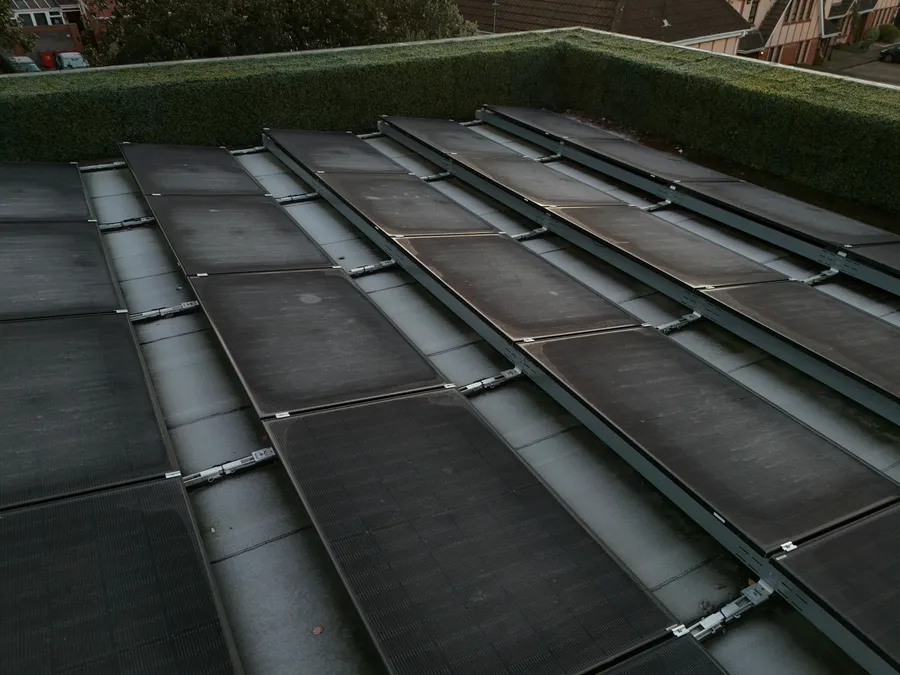
On a bright day your panels do three things at once: run the house, top up the battery, and sell the spare to the grid. The knack — and it is the whole job — is sizing things so as much as possible gets used at home, where it is worth most.
- Used in the house — worth full price
- Stored for the evening — worth nearly as much
- Sold to the grid — worth the least
Worth it or not
Not every property needs one
Batteries are the most oversold component in domestic solar. Here is how we assess it.
Usually worth it
- The property is empty through the working day and busy in the evening
- You are on a tariff with a meaningful day/night price difference
- You charge an electric car at home
- You have a heat pump running outside daylight hours
- Backup during outages matters to you
- Your existing solar system exports a large share of what it generates
Often not worth it
- The building already consumes most of its generation during daylight
- Farm and commercial sites with heavy, steady daytime load
- Consumption is low enough that surplus is small to begin with
- You are on a flat tariff with no off-peak window to exploit
Sometimes the answer is no
A battery is a significant part of a system’s cost. If your consumption pattern means it would spend most of its life half-cycled, we will say so, and suggest putting the money into a better-specified array or keeping it.
Specification
What to check on any battery quote
Battery specifications are where quotes become hardest to compare, because several different numbers get used interchangeably. These are the ones that matter.
- Usable capacity. Nominal and usable are different numbers. Usable capacity is what you get to use, and it is the one that should be quoted.
- Continuous power output. Capacity tells you how much energy is stored; power output tells you how much the battery can deliver at once. A large battery with modest output will not run a shower and an oven together.
- Warranty terms and throughput. Battery warranties are usually expressed in years and cycles or total energy throughput, whichever comes first.
- Whether backup is included. Outage protection needs specific equipment and extra wiring. It is not automatic.
- AC or DC coupling. This affects efficiency and what is possible when retrofitting to an existing array.
- Where it will physically go. Batteries have temperature, ventilation and clearance requirements. A garage wall is not always suitable.
Two common questions
Retrofits and backup power
Adding a battery to an existing system
Usually possible, and we will assess systems we did not install. Whether it is straightforward depends on your existing inverter. Some accept a battery directly; others need an additional AC-coupled battery inverter, which adds cost and a small efficiency penalty. We will tell you which situation you are in before you commit to anything.
Keeping the lights on in an outage
Backup is not a default feature. During a grid failure a standard system shuts down for safety; it must not feed the network while engineers may be working on it. Providing backup requires equipment that can safely island your building from the grid, plus wiring to the circuits you want supported. It is entirely doable, but it needs to be specified from the outset.
Good to know
Common questions
The things people ask us most about battery storage installation.
How do I get paid for electricity I export?
Export payments come from your electricity supplier under the Clean Export Guarantee, not from the government. When we commission your system we notify ESB Networks (the NC6 or NC7 form), which is what registers you as a microgenerator; your supplier then applies its export rate to your account. With a smart meter your actual export is measured; rates vary by supplier, so it is worth comparing. The first €400 a year of export income is exempt from income tax, an exemption currently legislated to the end of 2028.
How big a battery does a typical house need?
Enough to cover your evening and overnight consumption, and not much more. Capacity you cannot cycle daily earns nothing. For many Irish homes that lands somewhere between 5 and 15 kWh, but the real answer comes from your consumption pattern, which is what we model at survey stage before recommending a size.
What happens to the electricity I do not use?
You have three options and most systems use all of them: use it in the building as it is generated, store it in a battery for later, or export it to the grid. Exported electricity is paid for by your supplier under the Clean Export Guarantee. The rate you receive is set by your electricity supplier, so it is worth comparing.
Do I need a battery?
Not necessarily. A battery makes the strongest case where a lot of your consumption happens in the evening, after generation has dropped off, or where you want backup during an outage. If your building consumes most of its electricity during daylight hours, which is common for businesses and farms, a battery matters less. We model your consumption before recommending one.
Will a battery keep my power on during an outage?
Only if the system is specified for it. Backup requires compatible equipment and additional wiring so the system can safely disconnect from the grid and continue supplying your building. Not every battery installation includes this by default, so tell us at the outset if outage protection matters to you.
Can I add a battery or EV charger to an existing system?
Usually yes, though it depends on your existing inverter and consumer unit. Some systems accept a battery directly, others need an additional AC-coupled unit. We can assess a system we did not install and tell you what is possible before you commit to anything.
Does solar affect my BER or my house insurance?
Solar PV normally improves a BER, because it reduces the calculated primary energy use of the home, and a post-works BER assessment is part of the SEAI grant process anyway. On insurance, tell your insurer you have added solar, as with any alteration to the building. Cover for panels is routine.
Do solar panels actually work in the Irish climate?
Yes. Solar PV responds to daylight, not heat or direct sunshine, so panels generate on bright overcast days as well as clear ones. Output is strongly seasonal in Ireland, with summer generation far higher than winter, which is why we size a system around your year-round consumption pattern rather than a headline figure.
Explore
Other things we do
Most systems we install combine more than one of these. We design them together rather than bolting them on afterwards.
Domestic Solar PV
Solar PV sized to how your household uses electricity, with the SEAI grant guided at every step.
Learn more
EV Charging
Charge from your own roof or off-peak night rates, with a charger properly integrated into your system.
Learn more
Solar Maintenance & Support
Inspections, monitoring and repairs that keep a system performing across its warranted life.
Learn more
Get started
Find out if a battery is worth it
Send us a recent bill and we will model a battery against your consumption before you spend anything.