
Solar cleaning
Solar panel cleaning
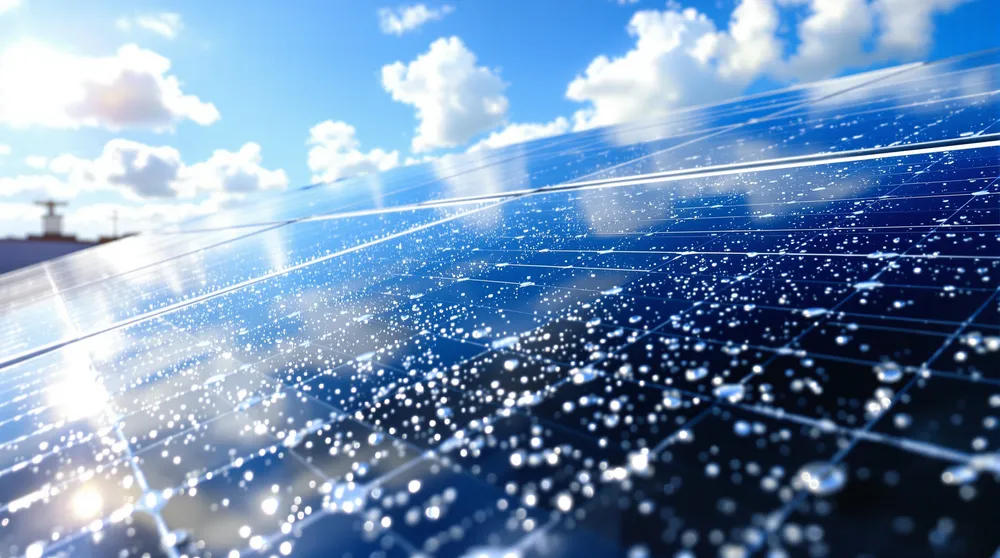
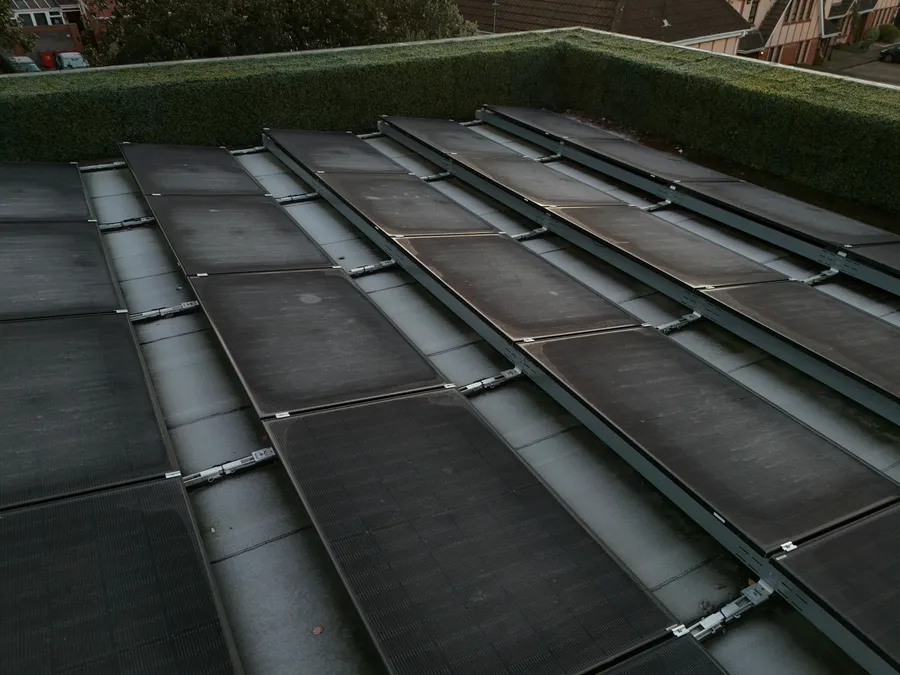
Irish rain keeps panels surprisingly clean. What it does not shift is what costs you output: bird droppings, moss, lichen, pollen and farm dust.
- Deionised water, soft brushes
- Any brand, any installer
- Inspection included
Accredited & registered Athlone · Installing solar since 2013 (13 years)
 SEAI Registered
 Safe Electric
 Solar Ireland Member
 Athlone Chamber
When it pays
When cleaning is worth doing
Rain handles light dust. It does not handle the stubborn soiling that builds up in Irish conditions.
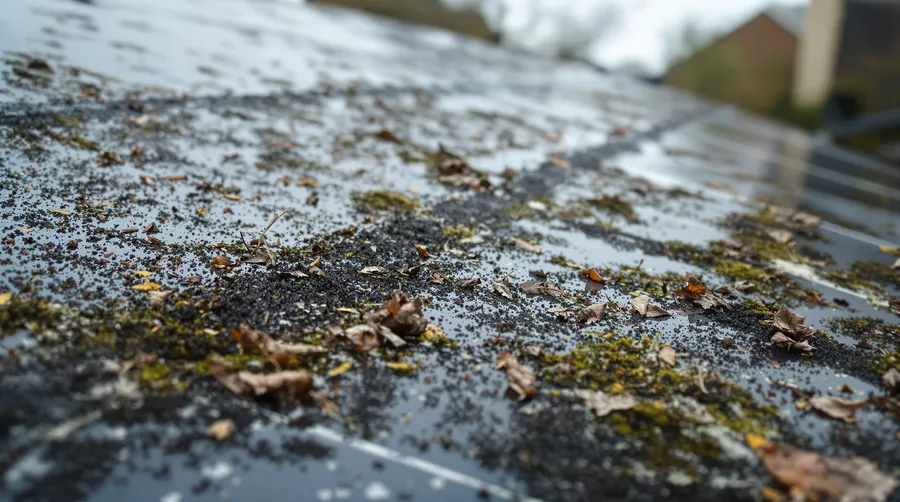
Bird droppings get baked on and are acidic enough to etch glass over time. Moss and lichen colonise panel edges in damp, shaded spots. Pollen films build through spring, and farms add harvest dust on top. Because a panel’s cells are wired in series, a soiled patch pulls down the section of the panel it sits on. Bypass diodes limit that to part of one module, but on a string inverter the effect still shows up across the array. The loss is disproportionate to the dirt.
The best guide is your monitoring data. If output has slipped against the same months last year and the weather has not changed, soiling is the usual suspect. If your panels are visibly clean and producing on benchmark, cleaning can wait.
Roughly how often
A standard suburban roof often needs attention only every year or two. Farms, coastal properties, homes under trees and roofs with bird activity need it more often. We advise for each property on its own.
Method
How we clean, and what we never use
Panels are toughened glass with an anti-reflective coating and sealed edges. Cleaning them properly is about protecting those three things while removing the soiling.
What a visit includes
- Deionised water and soft-bristle brushes, so no detergent residue and no scratched coating
- Safe access equipment suited to the roof in question
- Visual inspection while we are up there: cracked glass, lifted flashing, cable condition, nesting
- A before-and-after note against your monitoring output where data is available
- Any brand, any installer; we clean systems we did not fit
What we never use
- No pressure washers. They force water past edge seals and can crack glass — the single most common way owners damage their own panels
- No abrasive brushes or scourers. The anti-reflective coating does not grow back
- No chemical cleaners. Bleach and strong detergents degrade seals and can void the panel warranty
If you have safe ground-level access, you can do a light clean yourself with plain water and a soft brush, and we will happily tell you how. Anything at height belongs with people who are equipped for it.
Pricing
Priced by panel count, quoted before we travel
Cleaning is priced on the number of panels, the access required and where you are. You get the figure before we come, with no surprises on the day. Bundling a clean with a full maintenance inspection is usually the best value, because the access cost is shared across both.
- Domestic roofs, farm sheds and commercial arrays
- Scheduled while you get on with your day; most roofs need no access to the house
- Written note of anything we spot that needs attention
Good to know
Common questions
The things people ask us most about solar panel cleaning.
Does Irish rain not keep the panels clean anyway?
Rain does a fair job on light dust. What it does not shift is the dirt that costs you output: baked-on bird droppings, moss and lichen on the panel edges in damp shaded spots, spring pollen films, and harvest dust on farms. A panel’s cells are wired in series, so a soiled patch pulls down the section of the panel it sits on. Bypass diodes limit that to part of one module, but on a string inverter the effect still shows up across the array, so the loss is out of proportion to the amount of dirt.
How often do solar panels need cleaning?
A standard suburban roof often only needs attention every year or two. Farms, coastal properties, houses under trees and roofs with bird activity need it more often. The better guide is your monitoring data rather than the calendar: if output has slipped against the same months last year and the weather has not, soiling is the usual suspect. If your panels are visibly clean and producing on benchmark, we will tell you to keep your money.
Can I not just power-wash the panels myself?
Please do not. Pressure washers force water past the edge seals and can crack the glass. It is the most common way owners damage their own panels. Abrasive brushes take the anti-reflective coating off, and it does not grow back. Bleach and strong detergents degrade the seals and can void the panel warranty. We use deionised water and soft-bristle brushes. If you have safe ground-level access, plain water and a soft brush is fine and we will happily tell you how. Anything at height should be left to people equipped for it.
How long do solar panels last?
We install glass-glass panels, with glass on both faces rather than a plastic backsheet, and they carry a 30-year performance warranty. A performance warranty and a product warranty are two different things: the performance warranty covers the output over time, and the product warranty covers the panel itself. Your quote names both terms for the exact panel we are fitting. The inverters and batteries we fit are warranted for 10 years or more, and you should still expect an inverter to need replacement at least once over the life of the system.
Do solar panels need maintenance?
Very little, but not none. Irish conditions bring moss, lichen, salt and agricultural dust, and soiling reduces output gradually enough that owners often do not notice. Periodic inspection, cleaning where needed, and monitoring that catches faults early will keep an array performing across its full life.
Can I add a battery or EV charger to an existing system?
Usually yes, though it depends on your existing inverter and consumer unit. Some systems accept a battery directly, others need an additional AC-coupled unit. We can assess a system we did not install and tell you what is possible before you commit to anything.
What is the “AI” part, and does an engineer still look at it?
The software does the part nobody keeps up by hand: weather-adjusted yield models, string comparison, fault-code history and degradation trends, run every week across every system we watch. The judgement about what to do with a flag stays with our engineers. The practical payoff is that when a visit is needed it is a targeted one. The analysis says which string or which component, rather than sending someone up for a general look.
How do I get paid for electricity I export?
Export payments come from your electricity supplier under the Clean Export Guarantee, not from the government. When we commission your system we notify ESB Networks (the NC6 or NC7 form), which is what registers you as a microgenerator; your supplier then applies its export rate to your account. With a smart meter your actual export is measured; rates vary by supplier, so it is worth comparing. The first €400 a year of export income is exempt from income tax, an exemption currently legislated to the end of 2028.
Explore
Other things we do
Most systems we install combine more than one of these. We design them together rather than bolting them on afterwards.
Solar Maintenance & Support
Inspections, monitoring and repairs that keep a system performing across its warranted life.
Learn more
AI Performance Analysis
Automated analysis of your monitoring data that flags underperformance and unusual patterns for investigation.
Learn more
Domestic Solar PV
Solar PV sized to how your household uses electricity, with the SEAI grant guided at every step.
Learn more
Get started
Book a cleaning visit
Tell us the panel count and where you are. We will quote before we travel, and if your panels do not need cleaning yet we will say so.