
For your farm
Farm solar
Parlours, pumps, coolers and workshops draw power during daylight, the same hours a solar array produces. It is one of the best natural matches in Irish solar.
- 60% TAMS grant rate
- Up to €54,000
- Shed and ground-mount options
Accredited & registered Athlone · Installing solar since 2013 (13 years)
 SEAI Registered
 Safe Electric
 Solar Ireland Member
 Athlone Chamber
Why it suits farming
Farm load and solar generation line up
On most holdings, a high share of the electricity a system generates never leaves the farm.
That is the number that decides whether farm solar is worth doing. Milking, plate cooling, bulk tank refrigeration, water pumping, ventilation, meal augers and workshop tools are daytime loads. They draw at the same hours a roof is producing, so units are consumed on site and worth the full price you would otherwise have paid your supplier.
Dairy is the clearest case, because the demand curve is both daytime-weighted and highly predictable. But drystock holdings with significant pumping, storage or workshop load often stack up well too.
The shed is usually the better roof
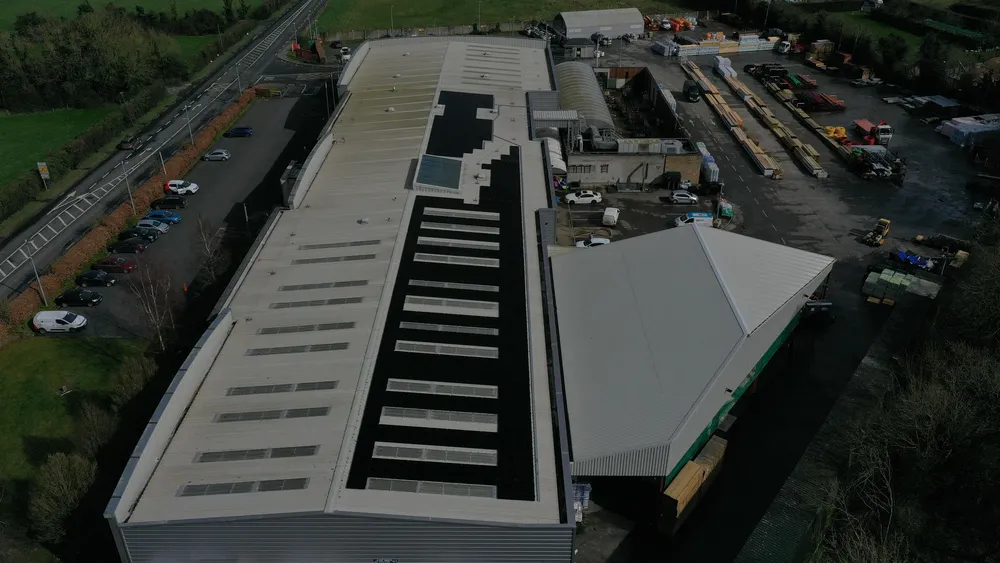
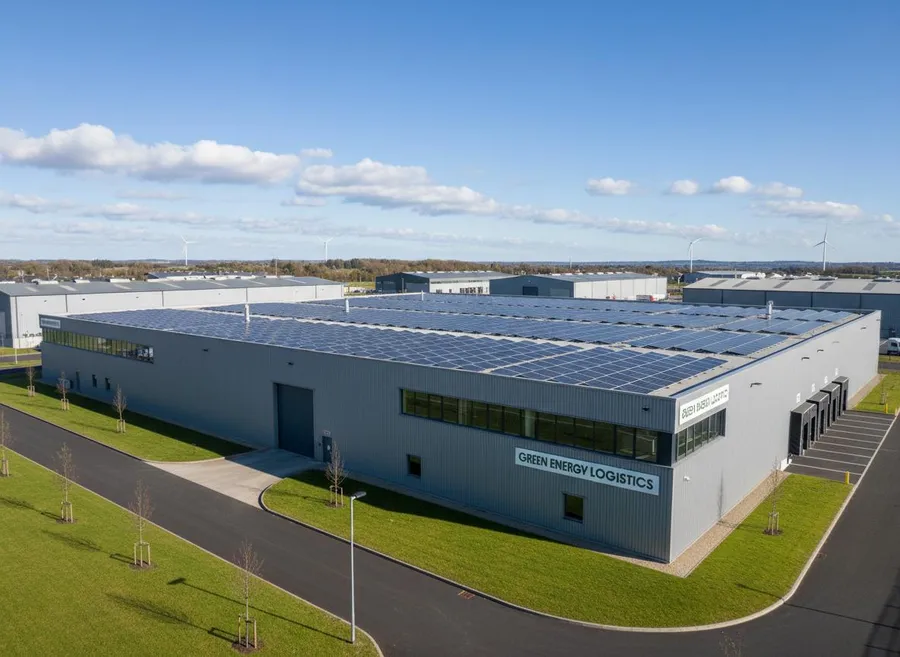
On most farms the shed beats the farmhouse. Shed and store roofs offer long, clear, unshaded planes with simple mounting and short cable runs to the board. They are cheaper and faster to work on than a complicated dwelling roof, and will generally carry a far larger array.
Grant support
Solar Capital Investment Scheme (SCIS) under TAMS 3
Farm solar sits outside SEAI. It is supported through TAMS and administered by the Department of Agriculture, Food and the Marine.
Grant rate
60%
Investment ceiling
€90,000
Ring-fenced for solar
Maximum grant payable
€54,000
60% of €90,000
Grant-aided system size
Up to 62 kWp
A correction worth making
You will see it stated in a lot of places, including until recently on our own website, that the TAMS solar grant is “up to €90,000”. That is not right. €90,000 is the maximum spend the grant is calculated against. At a 60% rate, the maximum payment is €54,000. Better to know that now than at application stage.
The ring-fencing is the valuable part
The solar ceiling is ring-fenced, so it does not consume the investment ceilings available to you for other farm buildings or machinery under TAMS. Battery storage is also eligible, capped at a capacity equal to 50% of the array’s rated size in kWp. One scheme per project though: TAMS funding cannot be combined with the SEAI Non-Domestic grant for the same investment.
Remaining 2026 deadlines: 4 December 2026
TAMS applications are processed in tranches, and the remaining closing date for 2026 is 4 December 2026. Miss a tranche and the application rolls into the next one, but approval, and the installation behind it, move back by months. If you want the system generating before next summer, the paperwork needs to start now.
The 2026 tranches have closed
TAMS applications are processed in tranches, and every 2026 closing date has now passed. An application lodged today rolls into the next tranche once the Department of Agriculture, Food and the Marine publishes its dates. The useful work now is getting the survey, specs and quotes ready, so the application can go in on day one.
Design
What we assess on a farm survey
Farm sites raise questions a suburban roof never does. These are the ones that shape the design.
Roof structure and sheeting condition
Older shed sheeting and purlins were not designed with an array in mind. We assess condition and structural capacity before specifying anything, and we will tell you if a roof needs work first.
Wind loading and exposure
Open agricultural sites carry considerably higher wind loading than sheltered suburban roofs, so the mounting system has to be specified for the exposure of your site. That takes real engineering input.
Supply capacity and export limits
On rural networks the existing connection and permitted export can constrain system size. We establish this early so the system we quote is one you can connect and register.
Load timing across the year
A dairy holding’s demand shifts substantially between peak and dry periods. We size against the pattern across the whole year, never a single snapshot.
Ground-mount where roofs will not do
Where no roof suits a decent array, a ground-mounted system removes the constraint entirely and allows optimal orientation and tilt. It carries its own planning considerations, which we work through with you.
Corrosive and dusty environments
Slurry gases, agricultural dust and coastal salt all affect equipment selection and where the inverter should sit. Putting the wrong equipment in the wrong shed is a durability problem that shows up years later.
Good to know
Common questions
The things people ask us most about farm solar PV installation.
Who handles the grant paperwork for a farm or business project?
It depends which scheme you are under. For TAMS, your farm advisor lodges the application and we supply the system specification, quotes and documentation it needs. For the SEAI Non-Domestic Microgen Scheme, the application is made before work starts and we provide the installer detail and the completion documents that release the payment. Either way, no work should start before approval is issued. That means TAMS approval from the Department of Agriculture, or the SEAI letter of offer, and we make sure that order is kept.
What grant is available for farm solar?
Farm solar is supported through the Solar Capital Investment Scheme (SCIS) under TAMS 3, administered by the Department of Agriculture rather than SEAI. It is grant-aided at 60% against a ring-fenced investment ceiling of €90,000, so the maximum grant payable is €54,000. Systems are grant-aided up to 62 kWp, and battery storage is eligible up to a capacity equal to 50% of the array’s rated size in kWp.
Can I claim TAMS and the SEAI Non-Domestic grant on the same building?
No. One scheme per project. Solar Capital Investment Scheme (SCIS) under TAMS 3 funding cannot be combined with the SEAI Non-Domestic Microgen Scheme for the same investment, so the choice has to be made before you apply. TAMS is grant-aided at 60% up to a maximum of €54,000 and supports systems to 62 kWp; the SEAI scheme runs to 1000 kWp with a maximum of €162,600, which matters if the holding needs a larger array than TAMS covers. We work out which is worth more on your specific project before anything is submitted.
What happens to the electricity I do not use?
You have three options and most systems use all of them: use it in the building as it is generated, store it in a battery for later, or export it to the grid. Exported electricity is paid for by your supplier under the Clean Export Guarantee. The rate you receive is set by your electricity supplier, so it is worth comparing.
What areas do you cover?
We are based in Blyry Business & Commercial Park in Athlone and work across the Midlands and nationwide. Athlone, Mullingar, Tullamore, Longford, Ballinasloe, Roscommon and the surrounding counties are our home patch, and we travel further for commercial and farm projects.
Explore
Other things we do
Most systems we install combine more than one of these. We design them together rather than bolting them on afterwards.
Battery Storage
Keep the electricity you generate instead of exporting it, and hold power in reserve for outages.
Learn more
Commercial Solar PV
Turn a large roof into a long-term hedge against electricity prices, with SEAI grant support of up to €162,600.
Learn more
Solar Maintenance & Support
Inspections, monitoring and repairs that keep a system performing across its warranted life.
Learn more
Get started
Let’s look at the holding
We will assess your sheds, your supply and your load, and tell you plainly what is worth doing.